|
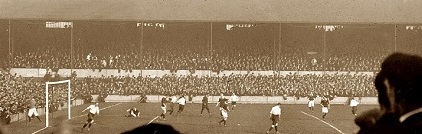
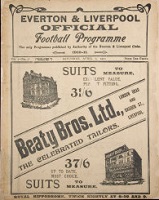 By drawing with Scotland in the last of the Internationals at Everton,
where a crowd of 50,000 assembled, England have won the championship,
By drawing with Scotland in the last of the Internationals at Everton,
where a crowd of 50,000 assembled, England have won the championship,
.jpg) but
at the same time their play was anything but edifying, and it is evident
that there were several men in the side who were out of their element in
such an encounter. Between the Rev. Kenneth Hunt and Pennington there was
very little understanding, though the last-named gave a fairly good
account of himself. That the Englishmen were able to share the honours in
what was on the whole a poor game is due to the 'old hands' in the team,
and Crompton, despite his length of service, during which he has been
awarded a couple of benefits, and represented his country, all told, in
almost fifty engagements, was the principal factor in keeping the Scottish
forwards at bay. Wedlock was not a striking success at centre half, and
certain is it that he did not keep in check the Glasgow Rangers' centre,
Reid, whom Roberts, the Bristol man's great rival for the post of centre
half, completely subdued in the inter-League game. but
at the same time their play was anything but edifying, and it is evident
that there were several men in the side who were out of their element in
such an encounter. Between the Rev. Kenneth Hunt and Pennington there was
very little understanding, though the last-named gave a fairly good
account of himself. That the Englishmen were able to share the honours in
what was on the whole a poor game is due to the 'old hands' in the team,
and Crompton, despite his length of service, during which he has been
awarded a couple of benefits, and represented his country, all told, in
almost fifty engagements, was the principal factor in keeping the Scottish
forwards at bay. Wedlock was not a striking success at centre half, and
certain is it that he did not keep in check the Glasgow Rangers' centre,
Reid, whom Roberts, the Bristol man's great rival for the post of centre
half, completely subdued in the inter-League game.
.jpg) Webb, the West Ham
amateur centre forward, was completely held in check by Low, the Newcastle
United stalwart, and Simpson was well looked after by Walker, the Swindon
back, though, nevertheless, the Blackburn Rover managed to get in a number
of centres in his usually effective style. But the forward play of the
Englishmen was not, on a whole, a success, and there is little doubt that
the Mother Country is lacking in young players of the real International
standard. Evans, the Sheffield United left winger, who in all but actual
place of birth is a Welshman, was comparatively feeble. Webb, the West Ham
amateur centre forward, was completely held in check by Low, the Newcastle
United stalwart, and Simpson was well looked after by Walker, the Swindon
back, though, nevertheless, the Blackburn Rover managed to get in a number
of centres in his usually effective style. But the forward play of the
Englishmen was not, on a whole, a success, and there is little doubt that
the Mother Country is lacking in young players of the real International
standard. Evans, the Sheffield United left winger, who in all but actual
place of birth is a Welshman, was comparatively feeble.
.jpg) Crompton having won the toss, Reid kicked off
for Scotland, facing the sun. The Scots attacked at the outset, and
Williamson had to clear. England retaliated, and Simpson and Bache were
prominent. Coleman, however, cleared, and Bennett put in a run, Crompton
going across and getting the ball away. Stewart fed Simpson neatly, and
the Blackburn Rover went down, but was checked. The Scots retaliated, and
Evans received an injury, following which a hot attack was made on the
visitors' goal, and Evans tried to charge Lawrence through. McMenemy,
working over to the left, put the ball across the home goal, and then
Evans broke away. England had a free-kick for pushing, and in a sharp
attack Bache threatened danger. Play was very fast, and once Coleman
missed the ball, but Lawrence covered him nicely. Evans fell when taking a
long cross-pass from the half-back, and then McMenemy was twice
conspicuous in efforts which came to nothing, the Scots for a while having
slightly the better of the exchanges.
Crompton having won the toss, Reid kicked off
for Scotland, facing the sun. The Scots attacked at the outset, and
Williamson had to clear. England retaliated, and Simpson and Bache were
prominent. Coleman, however, cleared, and Bennett put in a run, Crompton
going across and getting the ball away. Stewart fed Simpson neatly, and
the Blackburn Rover went down, but was checked. The Scots retaliated, and
Evans received an injury, following which a hot attack was made on the
visitors' goal, and Evans tried to charge Lawrence through. McMenemy,
working over to the left, put the ball across the home goal, and then
Evans broke away. England had a free-kick for pushing, and in a sharp
attack Bache threatened danger. Play was very fast, and once Coleman
missed the ball, but Lawrence covered him nicely. Evans fell when taking a
long cross-pass from the half-back, and then McMenemy was twice
conspicuous in efforts which came to nothing, the Scots for a while having
slightly the better of the exchanges.
.jpg) A free-kick against Hunt gave the
Scots a good chance, and in the course of a hot attack Bennett was left
unguarded. But he hesitated, and Pennington came across in the nick of
time. Eighteen minutes from the start England took the lead. Bache had
dribbled the ball down and centred, and there was a stiff scrimmage in the
Scots' goal-mouth, Stewart at length finding the net with a fine shot. The
Scots tried hard to equalise. Smith, who had not been much in the picture,
getting in a shot which went just over. On another occasion Wedlock made a
great effort in checking the Scots' right. Then Pennington took a
free-kick for hands, intending to cross to Simpson, but he sent behind. A free-kick against Hunt gave the
Scots a good chance, and in the course of a hot attack Bennett was left
unguarded. But he hesitated, and Pennington came across in the nick of
time. Eighteen minutes from the start England took the lead. Bache had
dribbled the ball down and centred, and there was a stiff scrimmage in the
Scots' goal-mouth, Stewart at length finding the net with a fine shot. The
Scots tried hard to equalise. Smith, who had not been much in the picture,
getting in a shot which went just over. On another occasion Wedlock made a
great effort in checking the Scots' right. Then Pennington took a
free-kick for hands, intending to cross to Simpson, but he sent behind.
.jpg) Even a narrower escape came from a hot drive by Hay, which forced
Williamson to conceded the first, but fruitless, corner of the match.
Despite an occasional breakaway by England, and a hot attack following a
free-kick in which Coleman headed away, the Scots were more frequently
dangerous. Smith hit the side of the net and Crompton cleared for the
right-wingers, who were giving Hunt a lot of trouble. With several minutes
to go before the interval Bennett beat Pennington and got in a fine
centre. Higgins sent in a fine shot and apparently hit the inside of the
upright, the Newcastle player, in running in, cannoning against the
upright himself. Williamson cleared, and the referee disallowed an appeal
for a goal, this causing a deal of dissatisfaction. At the interval the
score was still 1—0 in favour of England. Even a narrower escape came from a hot drive by Hay, which forced
Williamson to conceded the first, but fruitless, corner of the match.
Despite an occasional breakaway by England, and a hot attack following a
free-kick in which Coleman headed away, the Scots were more frequently
dangerous. Smith hit the side of the net and Crompton cleared for the
right-wingers, who were giving Hunt a lot of trouble. With several minutes
to go before the interval Bennett beat Pennington and got in a fine
centre. Higgins sent in a fine shot and apparently hit the inside of the
upright, the Newcastle player, in running in, cannoning against the
upright himself. Williamson cleared, and the referee disallowed an appeal
for a goal, this causing a deal of dissatisfaction. At the interval the
score was still 1—0 in favour of England.
.jpg) The Scots were soon in evidence on resuming, and Reid broke away and
passed to Bennett, who did not make full use of a good chance. He,
however, forced a corner, and a hot scrimmage in the home goal ensued.
Aided by a free-kick, the English defence held out, and the
representatives of the Rose worked back to the centre again. A free-kick
to the Scots caused anxiety, but again the home defence was equal to the
occasion. Walker then took a free-kick for Scotland, McMenemy slipped the
ball to Reid, who shot and forced a corner, but it did not lead to the
desired equaliser. Scotland resumed hard pressure, and came within an ace
of scoring from an attack on their left, but the English defence was
impregnable, though it was hard driven at times. It was seldom that the
ball, except in a series of exchangeable kicks, came over the half-way
line. Once, however, Evans crossed, and Simpson had a chance, but he
dallied. A little later the ex-Falkirk man threatened danger, but with
Walker on the ground, Coleman ran across and cleared. The Scots forced a
corner after a run by Bennett, but the English front line asserted
themselves and made fine, but futile efforts. The home attack lasted
several minutes, during which a corner was forced and was taken by Evans.
The English forwards did not shoot well, and Bache, who fed his wing well,
shot wildly over. Then the Scots assumed the offensive, and Higgins and
Smith each had shots for goal. Nearing the close Higgins cleverly forced a
corner off Crompton, and Smith took it. Higgins heading the equaliser amid
a great scene of great excitement. With four minutes to go, both strove
for a decider, but without success.
The Scots were soon in evidence on resuming, and Reid broke away and
passed to Bennett, who did not make full use of a good chance. He,
however, forced a corner, and a hot scrimmage in the home goal ensued.
Aided by a free-kick, the English defence held out, and the
representatives of the Rose worked back to the centre again. A free-kick
to the Scots caused anxiety, but again the home defence was equal to the
occasion. Walker then took a free-kick for Scotland, McMenemy slipped the
ball to Reid, who shot and forced a corner, but it did not lead to the
desired equaliser. Scotland resumed hard pressure, and came within an ace
of scoring from an attack on their left, but the English defence was
impregnable, though it was hard driven at times. It was seldom that the
ball, except in a series of exchangeable kicks, came over the half-way
line. Once, however, Evans crossed, and Simpson had a chance, but he
dallied. A little later the ex-Falkirk man threatened danger, but with
Walker on the ground, Coleman ran across and cleared. The Scots forced a
corner after a run by Bennett, but the English front line asserted
themselves and made fine, but futile efforts. The home attack lasted
several minutes, during which a corner was forced and was taken by Evans.
The English forwards did not shoot well, and Bache, who fed his wing well,
shot wildly over. Then the Scots assumed the offensive, and Higgins and
Smith each had shots for goal. Nearing the close Higgins cleverly forced a
corner off Crompton, and Smith took it. Higgins heading the equaliser amid
a great scene of great excitement. With four minutes to go, both strove
for a decider, but without success.
|
 England
Football Online
England
Football Online

.jpg)


.jpg)


flg.jpg)


 England
drew with Scotland at Goodison Park, Liverpool, on Saturday, with a
score of one goal each, and thus finished first in the International
Championship, Scotland being second, Wales third, and Ireland
fourth.
England
drew with Scotland at Goodison Park, Liverpool, on Saturday, with a
score of one goal each, and thus finished first in the International
Championship, Scotland being second, Wales third, and Ireland
fourth.