|
|
|
Raich
Carter |
Sunderland AFC,
Derby County FC, Hull City FC
,%20Raich.jpg) 13 appearances, 7 goals 13 appearances, 7 goals
P 13 W 9 D 1 L 3 F 40:
A 14
73% successful
1934-48
captain: none
minutes played: 1170 |
|
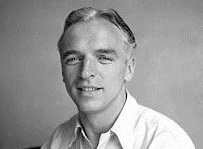 |
|
Timeline |
| |
Horatio Stratton Carter |
|
Birth |
21 December 1913 in
Hendon, Sunderland, County Durham
[registered in Sunderland, March 1914].
Attended
Hendon Elementary School |
|
Baptism |
14 January 1914 in
St. Barnabas, Hendon, Sunderland.
Son of Robert and Clara Carter. |
"FOOLISH
ACTION BY CYCLIST
"An incident in which a motor-car driven by
Horatio Carter, the Sunderland footballer, and a bicycle driven by a
14-year-old Herrington youth near the Board Inn, East Herrington, on May 9
were involved, had a sequel at Houghton-le-Spring Juvenile court to-day,
when the boy was accused of interrupting the free passage of the highway.
The youth pleaded not guilty, and the case was dismissed with a caution.
The boy's father was ordered to pay 4s costs. Carter said he was driving
to Sunderland, and the boy was standing with his bicycle on the left-hand
side of the road. 'There were two cars about ten yards in front of me,'
added Carter, 'and after they had passed the boy and when I was about five
yards from him he commenced to ride across the road. I blew my horn and
swerved my car across to the right, expecting him to turn back, but he did
not. I pulled up immediately, but just caught him. He gave no indication
that he was going to cross the road.' Mrs E. R. Challoner (presiding)
remarked: 'I think you were rather foolish to mount your cycle just to
cross the road. It would have been easier to walk across with the cycle."
- Thursday, 18 June 1936,
The Sunderland Echo & Shipping Gazette |
first marriage
|
twice, firstly
to Gertrude Rose Marsh, on 26 April 1937, at Spondon Lodge Lane Methodist Chapel in Spondon
[registered in Shardlow, Derbyshire, June 1937].
"The captain and
inside-right of Sunderland, the F.A. Cup finalists, Horatio Carter, was
married at the Methodist Church, Spondon near Derby, yesterday. Attending
him as best man was
Bobby Gurney,
the Sunderland centre forward. The bride was Miss Rose Gertrude Marsh, of
Field Lane, Chaddesden, a neighbouring village to Spondon. She had as
bridesmaids Miss Cora Evans and little Joan Eden, who on leaving the
church handed her a huge silver horseshoe. With her parents, the bride
moved about 18 months ago from Sunderland, where she and Mr. Carter had
been friends from childhood. Two hours after the service, which was
conducted by the Rev. J. Pilkington, Mr. Carter left for Bushey, Herts.,
where the Sunderland players are finishing their training in preparation
for the match at Wembley on Saturday. Mrs. Carter will see the game, and
later she and her husband will go on a honeymoon tour of Scotland."
- Tuesday, 27
April 1937, The Yorkshire Post. |
|
|
According to the 1939 register, Horatio S., a
professional footballer, is married to Gertrude (records blocked) and are
living at 4 Wooler Square in Sunderland. |
|
second marriage |
to Eileen Patricia Dixon
[registered in Hull, March 1955]. |
|
Death |
9 October 1994 in
Willerby, aged
80 years 292 days
[registered in Beverley, October 1994] |
|
Source |
 Douglas Lammings' An
English Football Internationalist Who's Who [1990] & Douglas Lammings' An
English Football Internationalist Who's Who [1990] & |
|
Biographies |
Footballer's
Progress: Raich Carter (Sporting Handbooks Ltd, 1950)
Raich Carter:
The Story of One of England's Greatest Footballers - Frank Garrick (Sportsbooks,
2003) |
|
Playing Career |
|
Club(s) |
Played
schoolboy football in Sunderland and was soon playing for Whitburn St.
Mary's FC and Esh Winning FC, as well as Sunderland Forge FC. Sunderland
AFC signed him on amateur forms in November 1930, following an
unsuccessful trial for Leicester City FC reserves aganist Watford FC
reserves, from which he earned a professional contract on 12 November
1931.
After 245 league appearances and 118 goals, he was allowed to leave for Derby County FC
on 21 December 1945 for an £8000
transfer fee. He had already worn a Rams shirt as a guest during the war.
Made 63 league appearances and scored 34 goals. Despite an attempt to
take him to Leeds United FC, on 31 March 1948, Hull City AFC paid £6000,
also beating Nottingham Forest FC and Notts County FC, to
make them their player/assistant manager, becoming manager four weeks later. Carter
resigned as manager on 12 September 1951. Berwick Rangers FC and
Distillery FC then attempted to sign him, as did Midland League side,
Scarborough FC, but he continued to play for the
Tigers until 28 April 1952, making another 136 appearances in the league
and adding another 57 goals to his tally. He made his final appearance
in a friendly match against Sunderland AFC. He turned up again eight months later at
Cork Athletic FC from 30 January until May 1953, flying to each match every
week; |
|
Club honours |
Football
League Champions (captain) 1935-36; FA Cup winners
1936-37, 1945-46; Football League Division Three North
winners 1948-49; FAI Cup winners 1952-53; |
|
Individual honours |
Football
League (four appearances); League of Ireland
(one appearance, 1953, against the Football League).
Football Writers' Association
Footballer of the Year runner-up 1948-49; |
|
Distinctions |
After
researching their family tree, it seems a relative of Raich discovered
that he was related to captain James Cook. captain James Cook turned out
to be Raich's great, great, great uncle. The family connection story was
covered by the Sunderland Echo.
Also played first class cricket with
Durham and Derbyshire. |
|
Height/Weight |
5'
6½", 10st.
8lbs [1937], 5'
8", 10st.
6lbs [1938]. |
|
Source |
Douglas Lammings' An English
Football Internationalist Who's Who [1990] & WearsideOnline |
|
Managerial Career |
|
Club(s) |
Took over as
player-secretary-manager of Hull City
AFC on 28 April 1948 until he resigned on 12 September 1951. Immediately
after, he was courted by Berwick Rangers FC. Midland League club,
Scarborough FC made an attempt to appoint Carter in November,
however, he remained a player in Hull. Then after leaving
Ireland, he became the manager at Leeds United on 5 May 1953, effective 1
June, until 31 May 1958. Leeds had announced on 9 May that they would not
renew Carter's contract, effectively sacking him. He was thereafter linked
with the vacant managerial positions at Notts County FC in September 1958,
and then at Aston Villa FC in December 1958. He eventually returned to
management when he was appointed at Mansfield Town FC from 15 February 1960
ahead of 36 other applicants. In December 1962, Norwich City FC offered
him £3500 a year to join them, but it was Middlesbrough
FC who took him away from Field Mill to Ayresome Park on 11 January 1963,
effective 21 January, until he was sacked on 12 February 1966. |
|
Club honours |
Football League Division Three North winners
1948-49; |
|
Source |
Douglas Lammings' An English
Football Internationalist Who's Who [1990] |
|
England Career |
|
Player number |
One of two who became the 594th
players (595) to appear for England. |
|
Position(s) |
Inside-right |
|
First match |
No. 191,
14 April 1934, England 3
Scotland
0, a British
Championship match at
Empire
Stadium, Wembley, London, aged 20 years 114 days. |
|
Last match |
No. 233, 18 May 1947,
Switzerland 1 England 0,
an end-of-season tour match at Hardturm
Stadion, Zürich, aged 33 years 148 days. |
|
Major tournaments |
British Championship 1933-34, 1936-37, 1946-47; |
|
Team honours |
British Championship winners 1946-47; |
|
Individual honours |
England
schoolboy (two appearances 1927). England wartime
(eight appearances) |
|
Distinctions |
None |
|
Beyond England |
,%20Raich.jpg) After being sacked as Middlesbrough manager, Carter
returned to Hull where he worked in the sports department of a store.
Appointed to the Pools Panel in 1969, and
then ran a business before retiring, and suffering a stroke in 1993. Has
a sports centre named in his honour in his hometown of Hendon, opened by
Sir Trevor Brooking, as well as a road in Hull. -
An English Football Internationalists' Who's Who.
Douglas Lamming (1990). Hatton Press, p.59/60. After being sacked as Middlesbrough manager, Carter
returned to Hull where he worked in the sports department of a store.
Appointed to the Pools Panel in 1969, and
then ran a business before retiring, and suffering a stroke in 1993. Has
a sports centre named in his honour in his hometown of Hendon, opened by
Sir Trevor Brooking, as well as a road in Hull. -
An English Football Internationalists' Who's Who.
Douglas Lamming (1990). Hatton Press, p.59/60. |
|
The Numbers |
|
parties |
Apps |
comp. apps |
unused/
reserve |
minutes |
 |
goals ave.min |
comp. goals |
captain |
|
15 |
13 |
6 |
five |
1170 |
7 |
167
min |
2 |
none |
|
minutes are an approximation, due to the fact that many matches rarely stick to exactly ninety minutes long, allowing time for injuries and errors. |
|
P |
W |
D |
L |
F |
A |
GD |
FTS
|
CS |
FAv |
AAv |
Pts% |
W/L |
|
13 |
9 |
1 |
3 |
40 |
14 |
+26 |
1 |
5 |
3.077 |
1.077 |
72.1 |
+6 |
Venue Record
|
Venue |
P |
W |
D |
L |
F |
A |
GD |
FTS
|
CS |
FAv |
AAv |
Pts% |
W/L |
|
Home |
8 |
7 |
1 |
0 |
30 |
6 |
+24 |
0 |
4 |
3.75 |
0.75 |
93.8 |
+7 |
|
Away |
5 |
2 |
0 |
3 |
10 |
8 |
+2 |
1 |
1 |
2.00 |
1.60 |
40.0 |
-1 |
Shirt Record
|
Colour |
P |
W |
D |
L |
F |
A |
GD |
FTS
|
CS |
FAv |
AAv |
Pts% |
W/L |
|
White |
12 |
8 |
1 |
3 |
37 |
14 |
+23 |
1 |
4 |
3.083 |
1.167 |
70.8 |
+5 |
|
Blue |
1 |
1 |
0 |
0 |
3 |
0 |
+3 |
0 |
1 |
3.00 |
0.00 |
100.0 |
+1 |
Competition Record
|
Competition |
P |
W |
D |
L |
F |
A |
GD |
FTS |
CS |
FAv |
AAv |
Pts% |
W/L |
|
British Championship |
6 |
4 |
1 |
1 |
18 |
7 |
+11 |
0 |
2 |
3.00 |
1.167 |
75.0 |
+3 |
| Friendly |
7 |
5 |
0 |
2 |
22 |
7 |
+15 |
1 |
3 |
3.143 |
1.00 |
71.4 |
+3 |
Tournament Record
|
British Championship Competition |
|
Type |
P |
W |
D |
L |
F |
A |
GD |
FTS |
CS |
FAv |
AAv |
Pts% |
W/L |
|
BC 1933-34 |
1 |
1 |
0 |
0 |
3 |
0 |
+3 |
0 |
1 |
3.00 |
0.00 |
100.0 |
+1 |
|
BC 1935-36 |
2 |
1 |
0 |
1 |
4 |
4 |
=0 |
0 |
0 |
2.00 |
2.00 |
50.0 |
=0 |
|
BC 1946-47 |
3 |
2 |
1 |
0 |
11 |
3 |
+8 |
0 |
1 |
3.667 |
1.00 |
83.3 |
+2 |
|
BC
All |
6 |
4 |
1 |
1 |
18 |
7 |
+11 |
0 |
2 |
3.00 |
1.167 |
75.0 |
+3 |
|
All Competition |
|
Type |
P |
W |
D |
L |
F |
A |
GD |
FTS |
CS |
FAv |
AAv |
Pts% |
W/L |
|
BC |
6 |
4 |
1 |
1 |
18 |
7 |
+11 |
0 |
2 |
3.00 |
1.167 |
75.0 |
+3 |
|
6 |
4 |
1 |
1 |
18 |
7 |
+11 |
0 |
2 |
3.00 |
1.167 |
75.0 |
+3 |
,%20Raich.jpg)
|
Club:
Sunderland A.F.C. - six full
appearances (540 min) 2ᵍ |
F.A. International Select Committee - six full appearances (540 min)
2ᵍx
|
|
apps |
match |
pic |
match details |
comp |
res. |
rundown |
shirt |
|
Club:
Derby County F.C. - seven full
appearances (630 min) 4ᵍ |
manager: Walter
Winterbottom - seven appearances (630 min) 4ᵍx
|
|
Club:
Hull City F.C. - no full
appearances |
|
|
|
 England
Football Online
England
Football Online