|
|
|
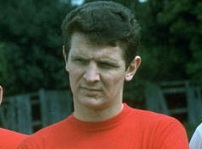
Brian
Labone |
Everton FC
26 appearances, 0 goals
P 26 W 14 D
6 L 6 F 44: A
23
65% successful
1962-71
disciplined: none
captain: none
minutes played: 2370 |
|
 |
|
Timeline |
| |
Brian Leslie Labone |
|
Birth |
23 January 1940
in Liverpool, Lancashire [registered in
Liverpool South, March 1940].
Attended Liverpool
Collegiate School |
|
Marriage |
to
Patricia E. Lynam
[registered in Wallasey, Cheshire, June 1966]. One daughter, later
divorced in 1970. |
|
Death |
24 April 2006 in Maghull, Liverpool, aged
66 years 91 days
[registered in Liverpool, May 2006]. Collapsed suddenly and
died from a heart-attack at his home.
Funeral took place at Liverpool Cathedral, and is buried in Anfield
Cemetery |
|
Source |
 Douglas Lammings' An
English Football Internationalist Who's Who [1990] & Douglas Lammings' An
English Football Internationalist Who's Who [1990] & |
|
Biographies |
x |
| |
x.
- A Football Compendium, Peter J. Seddon (1999). |
|
Club Career |
|
Club(s) |
Labone was always enthusiastic about sport, even
after joining the club as an amateur in 1955, he was sorely tempted to go to
university and deliberated coolly before accepting the offer of professional
terms at Goodison as a 17-year-old in 1957, spurning local rivals Liverpool
in the process. So impressive was the newcomer that he
leapfrogged the Toffees' three junior teams to claim a place in the
reserves.
Seven months later he made his first-team entrance, but it was not until his next senior outing, at home to Tottenham Hotspur in April 1957, that he discovered the cruel reality of
top-flight football, then earning a regular place in the First
Division line-up in 1959-60. Being made Everton skipper in 1964-65. In
September 1967, notionally in his prime at 27 and leading one of the best
teams in the land, he revealed that he was no longer enjoying his
football, having lost both form and confidence, and planned imminent
retirement. However, having bared his soul, he felt his mind clear and his
anxiety lift. Now he produced arguably the finest football of his life,
and he laid aside his boots in 1972. |
|
Club honours |
x |
|
Individual honours |
x |
|
Distinctions |
x |
|
Height/Weight |
6'
0½",12st.
11lbs [1966]. |
|
Source |
Douglas Lammings' An English
Football Internationalist Who's Who [1990]. |
|
England Career |
|
Player number |
One of three
who became the 811th players (811) to appear for England. |
|
Position(s) |
Centre-half |
|
First match |
No. 364, 20 October 1962, Northern
Ireland 1 England 3, a British Championship match at Windsor
Park, Donegall Avenue, Belfast, aged 22 years
270 days. |
|
Last match |
No. 448, 14 June 1970, West Germany 3 England
2, a World Cup Finals quarter-final match at
Estadio de Guanajuato, La Martinica, León, aged 30 years 142 days. |
|
Major tournaments |
European
Championship Finals 1968;
World Cup Finals 1970;
British Championship 1962-63, 1967-68, 1968-69, 1969-70; |
|
Team honours |
World Cup
Finals 1966 (withdrew injured);
British Championship winners 1967-68, 1968-69, shared
1969-70; |
|
Individual honours |
x |
|
Distinctions |
x |
|
Beyond England |
x. -
An English Football Internationalists' Who's Who.
Douglas Lamming (1990). Hatton Press, p.x.
Subsequently he enjoyed a successful sojourn
in insurance and served for many years on the Littlewoods "spot the ball"
panel. Meanwhile his love affair with Everton never abated. In recent
years he worked for the club as a match-day host, a convivial role to
which this courteous, patient, gently amusing man was ideally suited. |
|
Brian Labone - Career Statistics |
| Squads |
Apps |
comp. apps |
Starts |
Sub on |
Sub off |
Mins. |
Goals |
goals ave.min |
comp. goals |
Capt. |
Disc. |
| - |
26 |
14 |
26 |
0 |
0 |
2370 |
0 |
0
min |
0 |
none |
none |
|
minutes are an approximation, due to the fact that many matches rarely stick to exactly ninety minutes long, allowing time for injuries and errors. |
|
Brian Labone
- Match Record - All Matches |
|
Type |
P |
W |
D |
L |
F |
A |
GD |
FTS
|
CS |
FAv |
AAv |
Pts% |
W/L |
|
Home |
5 |
4 |
1 |
0 |
14 |
3 |
+11 |
0 |
2 |
2.80 |
0.60 |
90.0 |
+4 |
|
Away |
16 |
8 |
5 |
3 |
25 |
15 |
+10 |
4 |
6 |
1.563 |
0.938 |
65.6 |
+5 |
|
Neutral |
5 |
2 |
0 |
3 |
5 |
5 |
=0 |
2 |
2 |
1.00 |
1.00 |
40.0 |
-1 |
| All |
26 |
14 |
6 |
6 |
44 |
23 |
+21 |
6 |
10 |
1.692 |
0.885 |
65.4 |
+8 |
|
Brian Labone
- Match Record - By Colour of Shirt |
|
Type |
P |
W |
D |
L |
F |
A |
GD |
FTS
|
CS |
FAv |
AAv |
Pts% |
W/L |
|
White |
21 |
12 |
5 |
4 |
38 |
18 |
+20 |
4 |
8 |
1.81 |
0.857 |
69.0 |
+8 |
|
Red |
5 |
2 |
1 |
2 |
6 |
5 |
+1 |
2 |
2 |
1.20 |
1.00 |
50.0 |
=0 |
| All |
26 |
14 |
6 |
6 |
44 |
23 |
+21 |
6 |
10 |
1.692 |
0.885 |
65.4 |
+8 |
|
Brian Labone
- Match Record - By Type of Match |
|
Type |
P |
W |
D |
L |
F |
A |
GD |
FTS |
CS |
FAv |
AAv |
Pts% |
W/L |
|
WCP
|
0 |
0 |
0 |
0 |
0 |
0 |
=0 |
0 |
0 |
0.00 |
0.00 |
0.00 |
=0 |
|
WCF |
3 |
1 |
0 |
2 |
3 |
4 |
-1 |
1 |
1 |
1.00 |
1.333 |
33.3 |
-1 |
| World Cup |
3 |
1 |
0 |
2 |
3 |
4 |
-1 |
1 |
1 |
1.00 |
1.333 |
33.3 |
-1 |
|
ECP
|
3 |
1 |
1 |
1 |
5 |
7 |
-2 |
0 |
0 |
1.667 |
2.333 |
50.0 |
=0 |
|
ECF |
2 |
1 |
0 |
1 |
2 |
1 |
+1 |
1 |
1 |
1.00 |
0.50 |
50.0 |
=0 |
|
European Championship |
5 |
2 |
1 |
2 |
7 |
8 |
-1 |
1 |
1 |
1.40 |
1.60 |
50.0 |
=0 |
|
British Championship |
7 |
4 |
3 |
0 |
16 |
5 |
+11 |
1 |
2 |
2.286 |
0.714 |
78.6 |
+4 |
|
Note that the 1967-68
records of the European Championship and British Championship are
duplicated, and one set is therefore deducted from the grand total. |
| Friendly |
12 |
7 |
3 |
2 |
19 |
7 |
+12 |
3 |
6 |
1.583 |
0.583 |
70.8 |
+5 |
| All |
26 |
14 |
6 |
6 |
44 |
23 |
+21 |
6 |
10 |
1.692 |
0.885 |
65.4 |
+8 |
|
Brian Labone
- Match Record - Tournament Matches |
|
World Cup Finals Tournament |
|
Type |
P |
W |
D |
L |
F |
A |
GD |
FTS |
CS |
FAv |
AAv |
Pts% |
W/L |
|
WCF 1970 |
3 |
1 |
0 |
2 |
3 |
4 |
-1 |
1 |
1 |
1.00 |
1.333 |
33.3 |
-1 |
|
WCF
All |
3 |
1 |
0 |
2 |
3 |
4 |
-1 |
1 |
1 |
1.00 |
1.333 |
33.3 |
-1 |
|
European Nations' Cup/Championship
Preliminary Competition |
|
Type |
P |
W |
D |
L |
F |
A |
GD |
FTS |
CS |
FAv |
AAv |
Pts% |
W/L |
|
ENP 1962-64 |
1 |
0 |
0 |
1 |
2 |
5 |
-3 |
0 |
0 |
2.00 |
5.00 |
0.00 |
-1 |
|
ECP/BC 1967-68 |
2 |
1 |
1 |
0 |
3 |
2 |
+1 |
0 |
0 |
1.50 |
1.00 |
75.0 |
+1 |
|
EN/CP
All |
3 |
1 |
1 |
1 |
5 |
7 |
-2 |
0 |
0 |
1.667 |
2.333 |
50.0 |
=0 |
|
European Championship Finals Tournament |
|
Type |
P |
W |
D |
L |
F |
A |
GD |
FTS |
CS |
FAv |
AAv |
Pts% |
W/L |
|
ECF 1968 |
2 |
1 |
0 |
1 |
2 |
1 |
+1 |
1 |
1 |
1.00 |
0.50 |
50.0 |
=0 |
|
ECF
All |
2 |
1 |
0 |
1 |
2 |
1 |
+1 |
1 |
1 |
1.00 |
0.50 |
50.0 |
=0 |
|
European Nations' Cup/Championship |
|
Type |
P |
W |
D |
L |
F |
A |
GD |
FTS |
CS |
FAv |
AAv |
Pts% |
W/L |
|
EN 1962-64 |
1 |
0 |
0 |
1 |
2 |
5 |
-3 |
0 |
0 |
2.00 |
5.00 |
0.00 |
-1 |
|
EC 1966-68 |
4 |
2 |
1 |
1 |
5 |
3 |
+2 |
1 |
1 |
1.25 |
0.75 |
62.5 |
+1 |
|
EN/C
All |
5 |
2 |
1 |
2 |
7 |
8 |
-1 |
1 |
1 |
1.40 |
1.60 |
50.0 |
=0 |
|
British Championship Competition |
|
Type |
P |
W |
D |
L |
F |
A |
GD |
FTS |
CS |
FAv |
AAv |
Pts% |
W/L |
|
BC 1962-63 |
2 |
2 |
0 |
0 |
7 |
1 |
+6 |
0 |
1 |
3.50 |
0.50 |
100.0 |
+2 |
|
BC/ECP 1967-68 |
1 |
0 |
1 |
0 |
1 |
1 |
=0 |
0 |
0 |
1.00 |
1.00 |
50.0 |
=0 |
|
BC 1968-69 |
2 |
2 |
0 |
0 |
7 |
2 |
+5 |
0 |
0 |
3.50 |
1.00 |
100.0 |
+2 |
|
BC 1969-70 |
2 |
0 |
2 |
0 |
1 |
1 |
=0 |
1 |
1 |
0.50 |
0.50 |
50.0 |
=0 |
|
BC
All |
7 |
4 |
3 |
0 |
16 |
5 |
+11 |
1 |
2 |
2.286 |
0.714 |
78.6 |
+4 |
|
All Competition |
|
Type |
P |
W |
D |
L |
F |
A |
GD |
FTS |
CS |
FAv |
AAv |
Pts% |
W/L |
|
WC |
3 |
1 |
0 |
2 |
3 |
4 |
-1 |
1 |
1 |
1.00 |
1.333 |
33.3 |
-1 |
|
EN/C |
5 |
2 |
1 |
2 |
7 |
8 |
-1 |
1 |
1 |
1.40 |
1.60 |
50.0 |
=0 |
|
BC |
7 |
4 |
3 |
0 |
16 |
5 |
+11 |
1 |
2 |
2.286 |
0.714 |
78.6 |
+4 |
|
Note that the 1967-68
records of the European Championship and British Championship are
duplicated, and one set is therefore deducted from the grand total. |
|
All |
14 |
7 |
3 |
4 |
25 |
16 |
+9 |
3 |
4 |
1.786 |
1.143 |
60.7 |
+3 |
Match History
|
|
Age 22 |
|
|
withdrew - Scotland February 1962 |
|
|
Club: Everton F.C. -
26 full appearances (2370 min) |
manager: Walter
Winterbottom - two
full appearances (180 min)x
|
|
|
apps |
match |
pic |
match details |
comp |
res. |
rundown |
shirt |
|
|
manager: Alf Ramsey - 24
full appearance (2190 min)x
|
|
Alf Ramsey named his provisional list of forty players on April 7 that
excluded Brian Labone. He then named a provisional squad of 28 on 6 May
to attend Lilleshall that did include Labone, but he had to withdraw
because of injury. |
|
|
|
450 |
3 February 1971 -
Malta
0 England 1,
The Stadium, Gzira |
ECP |
AW |
injured
squad member |
|
|
|
|
 England
Football Online
England
Football Online